
Recent Post

Archive
- August 2026
- February 2025
- January 2025
Tags

How to Prevent My Dog From Getting Pregnant: A Practical Guide for Dog Owners
Dexter Blanch
Aug 10, 2026
0 comments
If your female dog has not been spayed, preventing an unwanted pregnancy requires more than simply keeping an eye on her. Once she enters her heat cycle, natural breeding instincts can become extremely strong—for both your female dog and any intact males nearby.
A door left open, an unsecured gate, an unexpected encounter during a walk, or just a few unsupervised minutes can create an opportunity for mating.
So, if you're asking, “How can I prevent my dog from getting pregnant?”, the most important answer is simple: prepare before she is fertile and use multiple layers of protection throughout her heat cycle.
Understanding when your dog is at risk, keeping her separated from intact males, closely supervising outdoor activity, securing your home and yard, and considering an additional physical barrier can all be part of a responsible pregnancy-prevention plan.
Can a Dog Get Pregnant During Her First Heat?
Yes. A female dog can become pregnant during her first heat cycle.
The fact that a young dog is capable of becoming pregnant does not necessarily mean she is physically or developmentally ready to have puppies.
This is one reason owners of intact female dogs should have a pregnancy-prevention plan in place before the first heat cycle begins.
If you're uncertain about when your dog may experience her first heat or when spaying is appropriate for her breed, age, size, and health, speak with your veterinarian.
Know the Signs That Your Dog Is Going Into Heat
Preventing pregnancy becomes much easier when you recognize the beginning of a heat cycle.
Signs can vary from dog to dog, but you may notice:
-
Swelling of the vulva
-
Bloody or pinkish discharge
-
Increased urination
-
Changes in behavior
-
Increased attention from male dogs
-
Restlessness
-
Increased licking of the genital area
-
Tail-position changes
-
Increased interest in other dogs
One particularly important warning sign may come from other dogs.
An intact male suddenly showing intense interest in your female can indicate that hormonal changes are occurring—even if you haven't noticed obvious physical signs yet.
Don't wait until your female is actively receptive to males before taking precautions.
How Long Can My Dog Get Pregnant During Her Heat Cycle?
There is no single fertility schedule that applies perfectly to every dog.
A dog's heat cycle commonly lasts around two to three weeks, although the length can vary considerably. The period during which she is actually fertile is shorter, but determining the exact beginning and end of that window without veterinary testing can be difficult.
This creates an important practical rule for pet parents:
Don't try to guess which days are “safe.”
If your dog is showing signs of being in heat, manage her as though pregnancy is possible and keep her separated from intact males until the cycle has fully ended.
If determining your dog's exact reproductive stage is important—for example, for breeding or medical purposes—consult your veterinarian about appropriate testing.
1. Separate Her From Intact Male Dogs
Physical separation is one of the most important ways to prevent pregnancy.
If an intact male lives in your household, simply telling the dogs “no” or watching them casually is not enough.
During the heat cycle, consider maintaining separate areas of the home with secure doors or other appropriate barriers.
Be particularly careful when moving either dog from one area to another.
Many accidental encounters occur during transitions:
Someone opens the wrong door.
A dog slips out of a room.
A child doesn't realize the dogs need to remain separated.
A visitor opens a gate.
Good pregnancy prevention requires everyone in the household to understand the plan.
2. Never Leave a Female in Heat Outside Alone
Your backyard may normally be perfectly safe.
A heat cycle changes the situation.
The scent produced by a female in heat can attract intact males, and a motivated dog may attempt to get over, under, or through a barrier to reach her.
During her heat cycle, accompany your female dog outside—even when she's only going out for a bathroom break.
A fenced yard should be viewed as one layer of protection, not permission to leave her unattended.
3. Keep Her on a Leash During Walks
A female in heat should generally remain under direct control when outside your home.
Avoid allowing her to roam freely.
Use a secure leash and pay attention to dogs approaching from a distance.
You may also want to change your normal walking routine temporarily.
Consider:
-
Walking during quieter hours
-
Choosing less populated routes
-
Avoiding areas where dogs commonly run loose
-
Keeping walks controlled and purposeful
-
Turning around if an off-leash dog approaches
The objective isn't to stop exercising your dog. It's to reduce unnecessary opportunities for contact with intact males.
4. Stay Away From Dog Parks
A dog park is one of the last places a female in heat should be.
Even if your dog normally enjoys playing with other dogs, temporarily avoiding dog parks, daycare environments, and other uncontrolled group-dog settings can dramatically reduce opportunities for accidental breeding.
Remember that you don't necessarily know which male dogs are intact.
It's safer to resume those activities after the heat cycle has completely ended.
5. Check Fences, Gates, Doors, and Other Escape Routes
Your normal household security deserves additional attention when your dog is in heat.
Inspect:
-
Fence lines
-
Gate latches
-
Spaces underneath fencing
-
Damaged fence boards
-
Screen doors
-
Garage doors
-
Dog doors
-
Crates and enclosures
Also consider access into your property.
Pregnancy prevention isn't only about stopping your female from escaping. You also need to reduce the possibility of an intact male getting to her.
6. Don't Depend on Obedience Training Alone
A well-trained dog is certainly easier to manage.
But reproductive behavior is heavily influenced by hormones and instinct.
A dog that normally responds immediately to recall commands may behave differently during a heat cycle. Likewise, an otherwise obedient male may become unusually persistent when he detects a nearby female in heat.
Training remains valuable, but it should complement physical management—not replace it.
7. Understand What Dog Diapers Actually Do
Dog diapers can be useful during a heat cycle.
They can help manage discharge, protect furniture, and keep your home cleaner.
However, most dog diapers are designed primarily for hygiene and containment of bodily fluids, not specifically to prevent breeding.
That distinction matters.
A product that catches discharge should not automatically be assumed to provide reliable protection against mating.
If preventing pregnancy is your objective, look at what the product was actually designed to accomplish.
8. Consider an Additional Physical Barrier
Pregnancy prevention works best when owners don't depend on a single precaution.
Think of protection in layers:
Supervision + Separation + Environmental Security + Physical Barrier
A purpose-designed anti-breeding barrier can provide an additional layer between your female dog and an intact male.
This can be particularly useful for households with multiple dogs, owners who travel with their dogs, breeders managing intact animals, and pet parents following veterinary recommendations to delay spaying.
A physical barrier should not replace responsible supervision or separation. Instead, it can serve as another safeguard within a comprehensive pregnancy-prevention strategy.
What If My Veterinarian Recommends Waiting to Spay My Dog?
This is an important situation for many pet parents.
The appropriate timing for spaying isn't necessarily identical for every dog. Your veterinarian may discuss factors such as your dog's age, breed, size, development, health, and individual circumstances when recommending when the procedure should occur.
If you and your veterinarian decide that spaying should be delayed, your dog may experience one or more heat cycles before surgery.
That means you'll need a strategy for preventing pregnancy during the waiting period.
Your plan may include:
-
Recognizing the beginning of each heat cycle
-
Separating your female from intact males
-
Closely supervising her outdoors
-
Avoiding dog parks and uncontrolled dog interactions
-
Securing your home and yard
-
Using additional physical protection
-
Following your veterinarian's recommendations
Waiting to spay does not mean you have to simply hope an accidental breeding doesn't occur.
You can prepare for it.
What If I Intend to Breed My Dog Later?
Preventing an unwanted pregnancy is just as important for responsible breeders as it is for pet owners who never intend to breed.
If you've selected a particular male based on health, genetics, temperament, pedigree, or other breeding considerations, an accidental mating with the wrong male can disrupt your entire breeding plan.
Controlled breeding means controlling when mating occurs and which dogs mate.
That requires careful management whenever an intact female enters heat.
What Should I Do If My Dogs Already Mated?
If you discover your female dog mating with a male, do not attempt to forcibly pull the dogs apart if they are tied together.
Dogs may remain physically connected for a period after mating. Attempting to force them apart can cause injury.
Keep the environment calm and contact your veterinarian promptly for professional guidance about what happened and what options may be available.
Don't assume that pregnancy definitely occurred—but don't assume that it didn't, either.
Your veterinarian is the appropriate person to advise you about the next steps.
The Best Pregnancy Prevention Strategy Uses Multiple Layers
There is rarely a single precaution that eliminates every opportunity for accidental breeding.
Instead, responsible prevention is about creating layers.
If one safeguard fails, another remains in place.
For example:
Layer 1: Know when your dog enters heat.
Layer 2: Keep her separated from intact males.
Layer 3: Supervise every outdoor trip.
Layer 4: Secure fences, gates, doors, and escape routes.
Layer 5: Avoid uncontrolled encounters with other dogs.
Layer 6: Add a purpose-designed physical barrier when appropriate.
This approach reduces your dependence on any single precaution.
Frequently Asked Questions About Preventing Dog Pregnancy
Can my dog get pregnant the first time she mates?
Yes. A female dog can become pregnant from a successful mating during her fertile period, including her first breeding.
Can my dog become pregnant during her first heat?
Yes. A female can potentially become pregnant during her first heat cycle.
Can a dog get pregnant from mating only once?
Yes. One successful mating can potentially result in pregnancy.
Will a dog diaper prevent pregnancy?
Most dog diapers are designed primarily to manage discharge and maintain cleanliness. They should not automatically be considered breeding-prevention devices.
Should I let my female dog outside when she's in heat?
Yes, but she should be closely supervised. Keep her securely leashed when appropriate and don't leave her unattended outdoors simply because your yard is fenced.
Should I take my female dog in heat to the dog park?
It's best to avoid uncontrolled group-dog environments while your female is in heat.
How do I know exactly when my dog is fertile?
The timing varies between dogs, and outward signs alone may not precisely identify ovulation. If knowing the exact reproductive stage is important, speak with your veterinarian about appropriate testing.
What happens if my male and female dog accidentally mate?
If they become tied, don't forcibly separate them. Keep the dogs calm and contact your veterinarian promptly for guidance.
Don't Wait Until She's in Heat to Make a Plan
One of the most effective things you can do to prevent an unwanted dog pregnancy is also one of the simplest:
Prepare early.
Know approximately when your dog's next heat cycle may occur.
Check your fences and gates.
Decide how you'll separate dogs in your household.
Make sure everyone understands the rules.
Have the supplies and protective equipment you intend to use available before you need them.
Because once your dog enters heat, prevention becomes a daily responsibility.
Add Another Layer of Protection With Delay Her Spay
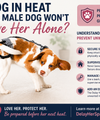
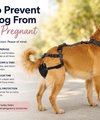
The Delay Her Spay Harness System was created for pet parents who want an additional physical barrier against unwanted breeding.
Unlike ordinary dog diapers designed primarily to contain discharge, Delay Her Spay is a patented anti-breeding harness system designed specifically to help prevent unwanted mating while allowing a properly fitted dog to urinate and defecate while wearing the system.
It can be incorporated into a broader pregnancy-prevention plan that includes supervision, separation, controlled walks, and secure surroundings.
Whether you're waiting to spay based on your veterinarian's recommendation, managing an intact female, or protecting a carefully planned breeding program, preparation matters.
Don't wait until an intact male is at the gate. Prepare before her next heat cycle with Delay Her Spay®.
- Anti-Breeding Harness, blood, breeding dogs, canine health, chastity belts, dog, Dog Health, Dog Heat Cycle, dog hormones, dog in heat, dog inventions, dog neutering, dog period, Dog Pregnancy Prevention, dog spay, dog tech, early spay and neuter considerations, Female Dog in Heat, heat cycle., Pet Safety, Prevent Dog Pregnancy, Puppies, Responsible Dog Ownership, responsible puppy care, reusable dog diapers, Spay, Spay and Neuter, spay dog, spay dogs in heat, Veterinary Education, washable dog diapers., what age should a dog be spayed
← Older Post Newer Post →